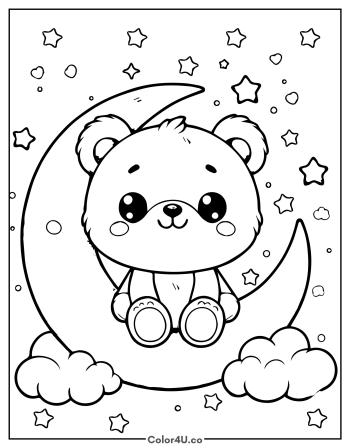
A chubby little bear sits on the crescent moon, big eyes looking out at the stars and fluffy clouds below. Try warm honey brown for the fur, creamy yellow for the moon, and pale blue for the clouds. A touch of pink on the inner ears and round cheeks pulls the whole look together.
Moon Coloring Pages
Free printable Moon coloring pages — clean line art, sized for US Letter and A4. Every page is a single-tap PDF download, ready to print at home or in the classroom.
All Moon coloring pages
Showing 13 of 13 printables ·
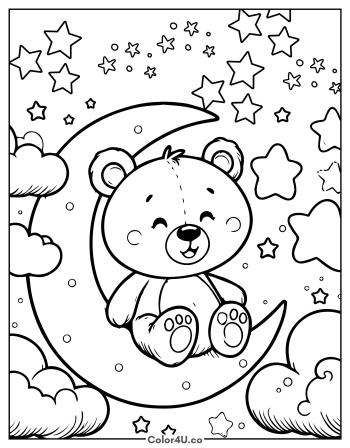
A happy teddy bear grins from his spot on the crescent moon, with fluffy clouds billowing on both sides and stars scattered across the sky. Color the bear in warm sandy brown, the moon creamy yellow, and the clouds soft white or pale blue. The round paw pads look great in a slightly darker brown.
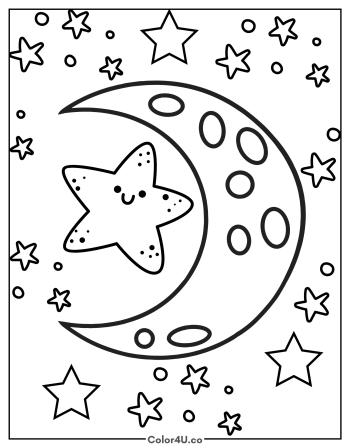
The crescent moon cradles a cheerful smiling star as smaller stars and circles fill the night sky around them. Try warm yellow or golden for the moon and star, with deep blues or purples for the sky behind them. Leaving the star's freckle dots uncolored keeps that sweet expression visible.
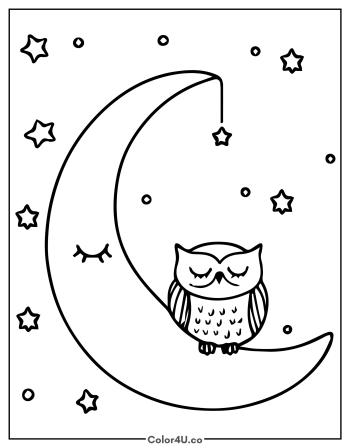
A drowsy owl perches on a crescent moon, both keeping each other company with their eyes closed. Color the owl in warm tawny browns and soft oranges, with pale cream for the face disk, and golden yellow for the moon. The layered feather markings on the chest look great with subtle shading between each row.
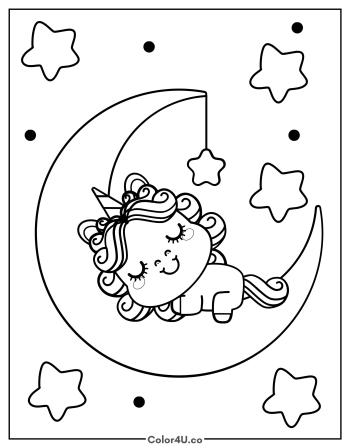
A baby unicorn has drifted off to sleep on the crescent moon, its curly mane flowing around its face and a striped horn pointing skyward. Try soft pastels for the mane, lilac or pale purple for the body, and warm gold for the horn. The many curling mane sections are great for practicing rainbow gradient colors.
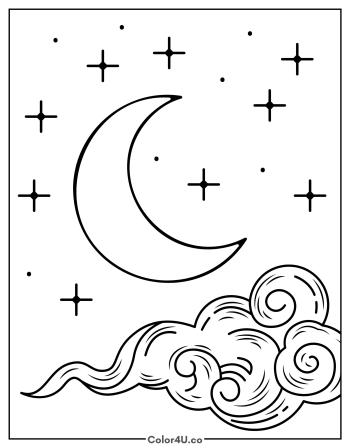
A simple crescent moon hangs in the sky above a decorative swirling cloud, with sparkle stars scattered all around. Color the moon pale yellow, the sky deep blue or navy, and the cloud soft white or light gray. The swirling lines in the cloud add some detail, but the shapes stay large and easy to fill.
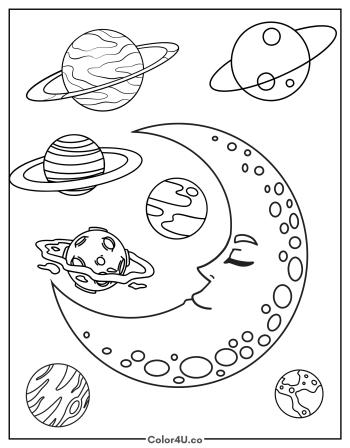
A sleeping crescent moon sits at the center of a little solar system, surrounded by six ringed and cratered planets. Each planet has its own pattern, so try a different color scheme for each one. The moon's rows of oval craters along its curved body are satisfying to shade.
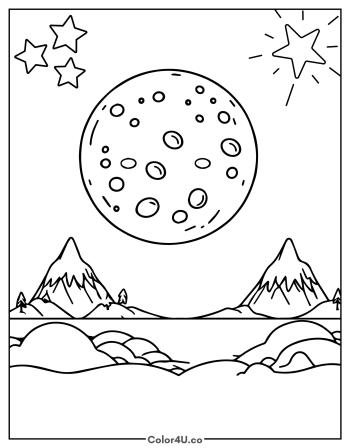
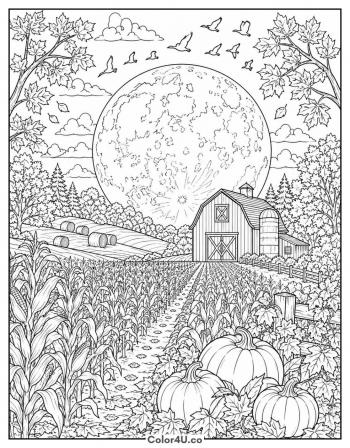
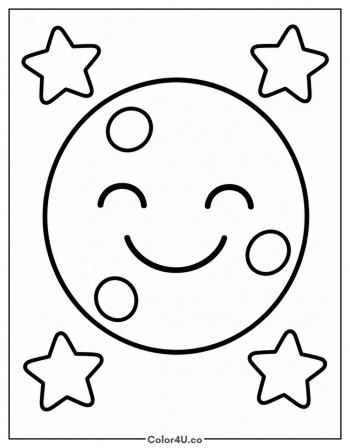
A full moon covered in craters rises above a mountain landscape with pine trees and rolling hills. Color the moon in pale silver or creamy white, the sky deep midnight blue, and the mountains in cool grays and blue-whites for snowy peaks. The crater shapes on the moon offer a satisfying pattern to work through.
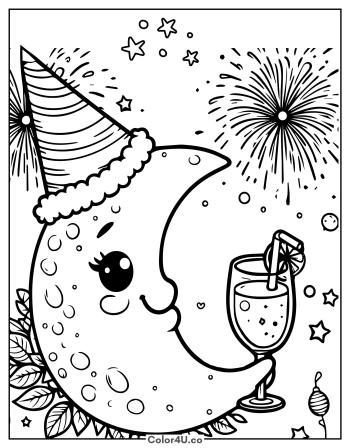
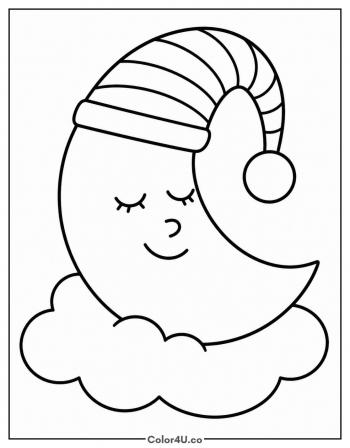
A crescent moon in a party hat toasts with a champagne glass as fireworks burst overhead and leaves frame the scene below. Color the moon warm cream, the fireworks in bold reds and gold, and the party hat in festive stripes. The scattered spots on the moon surface are great for subtle shading practice.
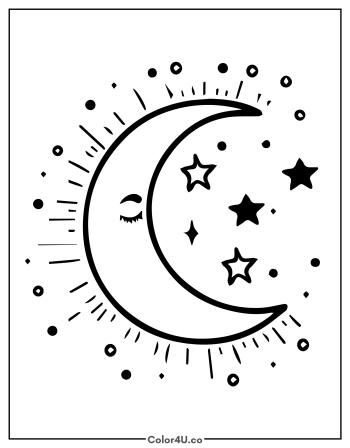
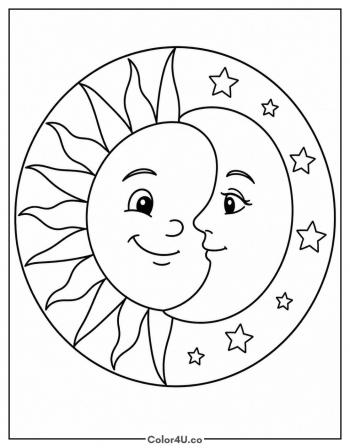
A crescent moon with closed eyes floats amid a halo of radiating lines, circles, and scattered stars. Color the moon pale yellow or warm gold, and try deep blue or purple for the background to make it glow. The stars tucked inside the crescent look great in a mix of gold and white.
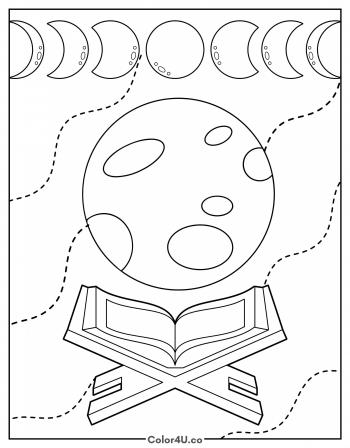
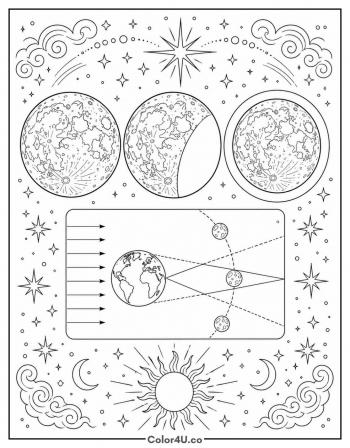
Seven moon phases run across the top while a large full moon sits on an open book and wooden stand below. Color the moon phases in graduated grays, the central moon in pale silver, and the wooden book stand in warm brown tones. The dashed orbit lines add a finishing detail to the background.
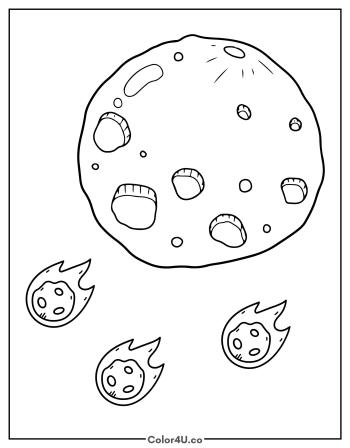
A cratered moon floats in space while three flaming meteorites streak away from it below. Color the moon in dusty gray with darker crater shadows, and use fiery orange and yellow for the meteorite flame tails. The chunky crater shapes on both the moon and the meteorites have satisfying interior lines to shade.
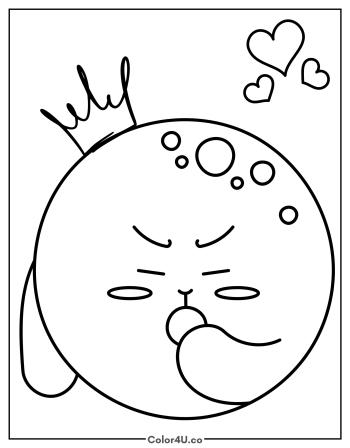
The moon queen rests her eyes and lets out a big yawn, her crown sitting slightly askew on her round face. Color her face warm pale yellow, the crown gold or purple for a royal look, and add soft pink to her open mouth. The three floating hearts in the corner are a sweet finishing touch.
Fun things to do with your Moon coloring pages
Build a moon-phase wall chart
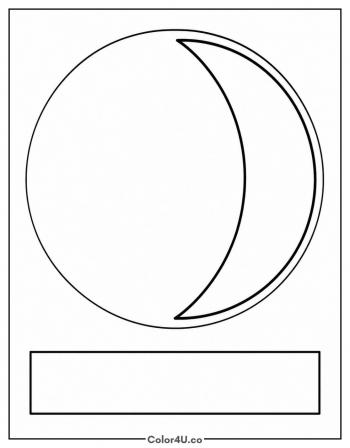
Color one page per night for a month, labeling each one — waxing crescent, first quarter, waxing gibbous (full), and back down through waning. Pin them in order on a wall and match each page to what you can actually see in the sky that night.
Make a glow-in-the-dark moon
Color a full-moon page in white or pale yellow, then brush glow-in-the-dark paint over the moon shape only. Charge it under a lamp during the day and hang it near a bed — the moon lights up at night while the sky stays dark.
Build a moon-phase flipbook
Color a sequence of small pages from new moon through full moon and back, staple them along one edge, and flip the corner with your thumb. The moon waxes and wanes like a tiny animation — a strong science-fair entry for older kids.
Make a "to the moon and back" card
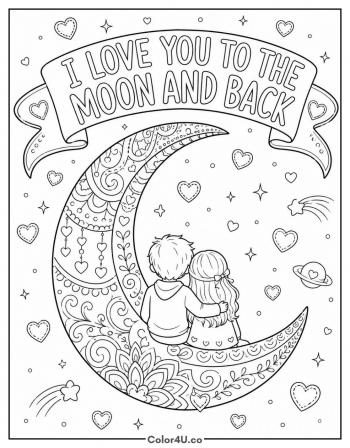
Fold a colored crescent moon page in half, write "I love you to the moon and back" inside, and tuck in a small drawing or photo. It can be used as a Mother's Day card, a long-distance note, or a bedtime message slipped under a pillow.
Run a moon-phase memory game
Print two copies each of several phase pages, color the pairs the same, cut them into matching cards, and play memory or snap. Younger kids learn to name the phases of the moon while practicing visual recall — this activity is great for classroom centers.
Hang a moon-phase mobile
Cut out colored moons in different phases, glue each to card stock, punch a small hole in the top, and tie them with string to a coat hanger or embroidery hoop. Put it above a place where you read or sleep to see a night sky that spins slowly.
Color by lunar legend
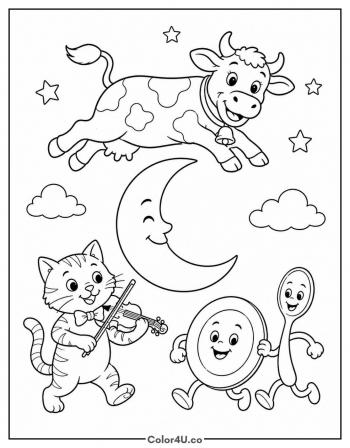
Pick a moon myth — the Man in the Moon, the rabbit who lives there in East Asian folklore, the cow who jumped over it — and color the page to match the story. Read the legend out loud while coloring for a quiet activity and story time.
Build a constellation collage
Color a page so that it looks like a full moon. Then, glue it to black or dark blue construction paper. Draw the Big Dipper or Orion around it in white crayon or chalk, and add small star cutouts from other pages. One sitting contains a miniature night sky scene.